For founders of early-stage SaaS
Build an AI-native SaaS.
We build the AI-native systems that develop, market, and sell software, so early-stage SaaS founders can spend their time on decisions that move the needle.
Designed, built and run by Raine Soriano. Los Angeles.
- One engineer owns what ships. Coding, test, security and documentation agents do the volume.
- Yours from the first commit. Repo, hosting, secrets and keys live in your accounts.
- One accepted deliverable a week. Pause or end at any month end.
The problem
Build the product. Get it to users. Fund the company.
A founder’s time is the most valuable resource in a startup. You have three jobs, and handing off product or customer acquisition means managing a team.
What AI-native means here
Agents do the work. You make the decisions.
An AI-native SaaS develops its product with agentic engineering owned by one accountable engineer, and runs marketing and sales on systems you approve at a gate instead of a team you manage.
You write the product yourself, or you hire engineers and manage them.
One engineer owns what ships
The product itself, shipped through agentic engineering. One engineer decides what ships and reviews it; coding, test, security and documentation agents do the volume.
Marketing is you, between everything else, or an agency you manage.
Content, email and ads run as systems
The content engine, lifecycle email, the site and its SEO, and paid-ads loops with their own audits.
Outbound is a spreadsheet and the follow-ups you remember to send.
Agents run outbound, you take the calls
Outbound: the list, verification, sequences and reply research. CRM automation and lead handling behind it.
Each one lands in your accounts with telemetry, an approval gate and a runbook. You make the decisions; the systems do the volume.
How it works
A call, an assessment, then weekly sprints.
Fixed price on the assessment, your acceptance on every week of the retainer, and nothing you cannot end at a month end.
Free intro call
A short call on whether the fit is there, and what the assessment would look at. Book it on the calendar.
The AI-native assessment
Seven days from read-only access. We read the codebase and the marketing and sales motions as they run today, and deliver a written report and a walkthrough: what we would build, where an existing tool is the better answer, and what ships first.
The development retainer
One named deliverable a week, with a written definition of done at the start and your acceptance at the end. Pause or end at any month end. Everything built is in your accounts and yours.
Proof
We run on the systems we build.
Our own product, marketing and outbound run the same way we propose for yours. On the call we put them on screen.
Powr
A training app Raine designs, builds and markets solo: the product, the landing page and the campaigns, shipped through agentic engineering with one engineer deciding what ships.
Archer Scaling AI
The content engine behind this site and the weekly shipping post, the outbound list, verification and sequences, and the monitor that watches every job and alerts when one fails. Built and run the same way we build for clients.
First client engagement
An early-stage SaaS whose founder asked for one person to own the technical side and the distribution system. The assessment is underway; the case study is published once the founder approves it.
Who you work with
Raine Soriano
Founder and engineer, Archer Scaling AI. Los Angeles.
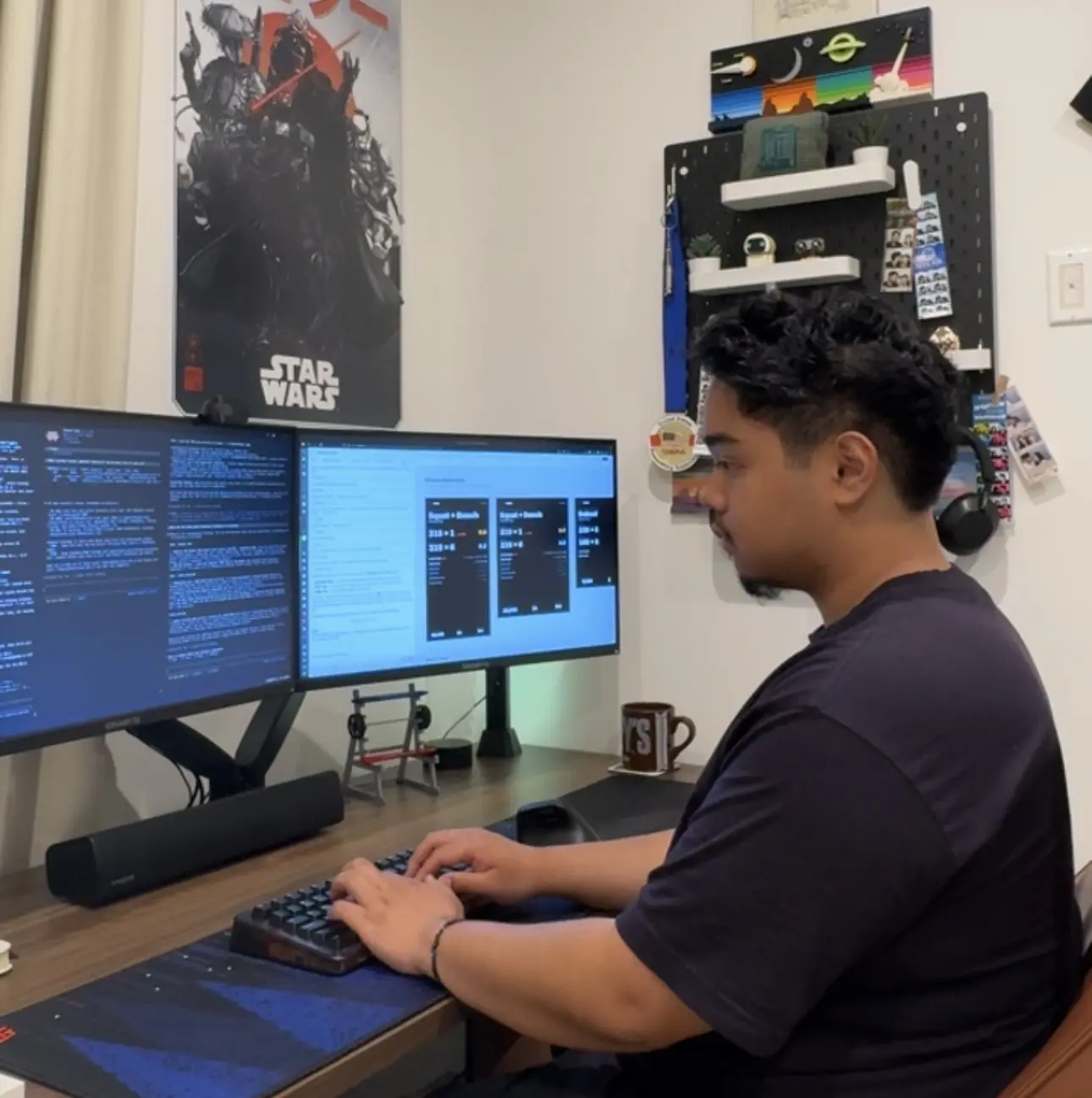
I’m Raine Soriano, a software engineer in Los Angeles and the founder of Archer Scaling AI. I build and run the systems that develop, market and sell early-stage SaaS. I decide what ships and review it; coding, test, security and documentation agents do the volume.
You work with the engineer who designs, builds and runs the systems. Nothing is lost in a handoff, and everything built sits in your accounts.
Raine
Yours from the first commit
Repo, hosting, secrets and model keys sit in your accounts. Everything is built from scratch, with no licence and no runtime dependency on us.
Read-only until you say otherwise
The assessment runs on read-only access through your own secret manager. Credentials stay scoped and revocable.
End at any month end
One accepted deliverable a week and no build fee. Pause or end the retainer at any month end, and the systems keep running in your accounts.
Straight answers
The questions founders ask on the first call
Each answer is the mechanism, not a reassurance. If the fit is not there, we say so on the call.
Why not hire a developer, or a CTO?
Hire when the product has earned it. Until then one engineer with coding, test, security and documentation agents owns the technical side, in your accounts, and the headcount decision stays yours. Nothing we build has to be unwound when you do hire.
I have been burned by contractors and agencies before.
The cost you were paying was management. Here your involvement has one shape: a decision at an approval gate. Each week starts with a written definition of done and ends with your acceptance, and you can pause or end at any month end.
What if it never finishes?
One named deliverable ships every week or it is not accepted. Scope changes land at the next weekly boundary instead of stretching the current one, so there is always a shipped thing behind you.
Will we depend on you?
No. Repo, hosting, secrets and keys sit in your accounts from the first commit. Everything is built from scratch, with no licence and no runtime dependency on us, so the systems keep running when the retainer ends.
What does the assessment look at?
Seven days from read-only access: the codebase, the marketing and sales motions as they run today, and how product decisions get made. You get a written report and a walkthrough covering what we would build, where an existing tool is the better answer, and what ships first.
Who makes the product decisions?
You do. The systems put usage, cost and feedback in front of you fast. We never decide what the product does next, what gets published or where spend goes.
Spend your time on the decisions that move the needle.
Book a free intro call. We talk through where your product, marketing and sales stand today and whether the assessment is the right next step.